
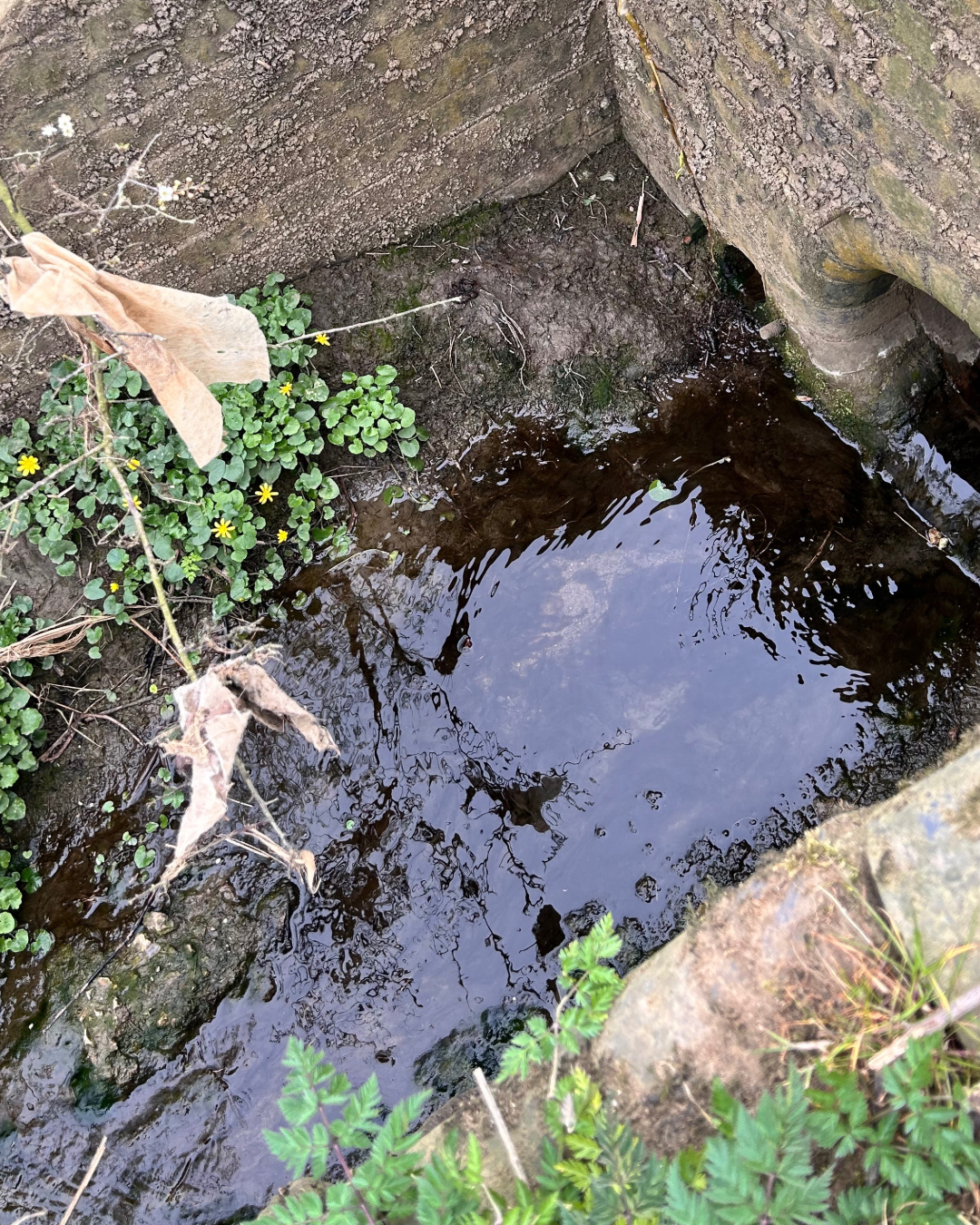
Combined Sewer Overflows (CSOs) are designed to release diluted wastewater only during heavy rain.
When they spill in dry or light‑rain conditions, or when something looks “off”, community observations become vital.
Here are ten things anyone can look for all based on visible, factual signs, not assumptions about cause.
1. Unusual or persistent smells
A strong sewage, sulphur, or “rotten egg” smell near an outfall can indicate something entering the water that shouldn’t be there.
2. Discoloured water
Grey, brown, milky, or cloudy plumes spreading from an outfall are worth noting, especially if the rest of the river is clear.
3. Toilet debris or sanitary products
Wet wipes, cotton buds, or tissue in the water or caught on vegetation are classic indicators of wastewater reaching the river.
4. Sudden changes in flow
If an outfall is discharging on a dry day, or flowing harder than the river itself, that’s important evidence to record.
5. Foam
Thick, white, brown, or persistent foam collecting downstream can be a sign of pollution. Natural foam tends to be light, off‑white, and breaks apart easily.
6. Sewage fungus
This looks like slimy, grey‑brown, cotton‑wool strands on stones or plants. It forms when organic pollution has been present for a while.
7. Dead fish or distressed wildlife
Fish gasping at the surface, birds avoiding the water, or invertebrates washed up can indicate a water‑quality problem.
8. Oil sheens
A rainbow‑coloured film on the surface that “swirls” when disturbed is often a sign of hydrocarbons or fats entering the water.
9. Blocked or damaged outfall structures
Collapsed pipes, sandbags, broken grills, or eroded banks can all contribute to abnormal discharges.
10. Absence of the outfall on public maps
If you see an active outfall that isn’t shown on the company’s live spill map, that’s a transparency issue worth reporting without speculating on the cause.
How to Report Pollution (Safely and Effectively)
1. Record what you see
Stick to observable facts:
• Date and time
• Weather conditions
• Photos or short videos
• What the water looked/smelled like
• Whether the outfall was flowing
Avoid guessing the cause regulators prefer neutral, factual reporting.
2. Report to the Environment Agency
Use the EA’s incident hotline 0800 80 70 60 to report:
• Sewage smells
• Visible pollution
• Fish in distress
• Unusual discharges
State that you are reporting a suspected pollution incident based on what you observed.
3. Notify your local council if it’s in a public park
Councils handle public‑health concerns and can escalate to environmental health teams.
4. Log it with the water company
Provide the same factual description. You’re not alleging wrongdoing you’re reporting an incident for investigation.
5. Share with Clean River Action
Citizen evidence helps build a fuller picture of what’s happening on the river, especially when official data is incomplete.
Why Your Observations Matter
Every photo, smell report, or dry‑day discharge logged by the public helps build a clearer record of river health. When communities document what they see, it becomes harder for pollution to go unnoticed and easier for regulators to act.